Today is World Mental Health Day, making it the perfect time to share another exclusive interview that emphasizes the importance of work-life balance and well-being. We carry on our mission to explore how global leaders find the balance between professional success and personal fulfillment.
I hope this will inspire you to take action and enhance your well-being and personal satisfaction, while also driving greater success in your career and performance.
Do not allow other people to control your time. Make sure you regain control of that.
Peter Smith
·Sr. Vice-President of Strategic Partnerships, Cover Genius
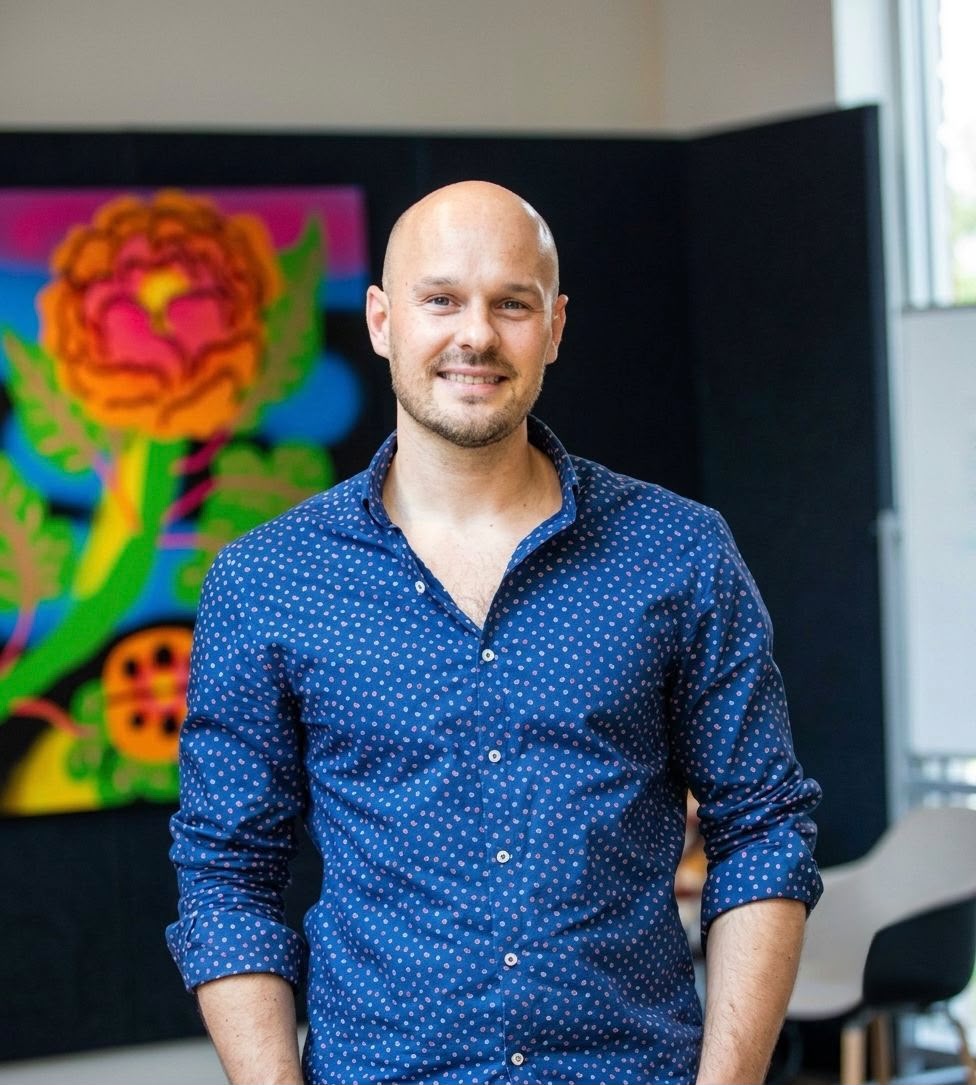
This time, I had the pleasure to interview Peter Smith, Senior Vice President of Strategic Partnerships at Cover Genius. Peter is an inspiring leader who continually fosters a human touch in his professional environment, keeping it at the heart of everything he does.
“I am Peter Smith, Sr. Vice-President of Strategic Partnerships at Cover Genius. Much of my role involves strategy but mostly it's about people! It's about building relationships internally, cross functionally and, of course, building external relationships to establish and develop global strategic partnerships.
I think of my role very much as building relationships through people connection above anything else. Personally, I'm a family man with a high school age son. Being part of his life journey has given me whole new perspectives. It's the most wonderful experience. I enjoy continuous learning, self-improvement, health, fitness, and trying to be a little more Zen every day.”
How do you personally define work-life balance, and why do you think it's important?
Work-life balance means different things to different people. I don't believe it's the amount of hours you spend in work vs. doing other things. I think of life-work balance as being happy within yourself, in how you spend your time.
Some people would be happy spending more time working. For others, it might be spending more time on their health and fitness, or with their family and friends. For me, it's a blend of the two. It's about feeling like I am making progress at work and in my career, while having the opportunity to do the things that I love, with the people I care about.
What is the biggest challenge you've faced in maintaining work-life balance, and how did you manage to overcome it?
My biggest challenge is not taking work “home” with me. Especially working from home, having a start and an end to the work day can be difficult, a real challenge.
Furthermore, we are all connected all the time. Carrying around our phone means it's really hard actually to escape from emails, calls, Slack, WhatsApp. Particularly when like myself, you work in a global organization where your days are typically bookended with comms, calls, emails from other time zones.
Recently I've started to plan time in my diary for myself. By adding slots for tasks I need to achieve, and not just for meetings, I can protect my time and choose to use it as I please. One of the biggest learnings for me over the recent years is do not allow other people to control your time. Make sure you regain control of that.
The second thing that I've started to do is genuinely switch off. If I go on leave for example, I choose moments where I might lock my phone in the safe, or simply switch it off. I start small and build micro-habits. After 3, 6 months, I realize that I've stacked them all, and it can be quite transformative.
What misconceptions about work-life balance have you encountered in your journey?
The scales aren't evenly balanced, and they probably never will be. Once you understand and get comfortable with that, it becomes easier to handle when at times the scales have to tip in either direction.
For me, when I think of work-life balance, it's about priorities and flexibility. I made a commitment to myself on the day my son was born that I would never miss key moments in his life, from learning to walk, to school plays. I've stuck to that promise because these things only ever happen once in life, and I don't ever want to grow old with regrets.
Make promises to yourself around things that are truly, deeply important to you within your heart and try to stick to those promises. But also realize that life is very rarely evenly balanced, and if you get comfortable with that fact, everything is much easier.
We work in technology, and downtime in tech is a bad thing, but down time in life is a feature. We have to make time for it.
Peter Smith
·Sr. Vice-President of Strategic Partnerships, Cover Genius
How do you prioritize tasks and manage your time effectively?
Keep things simple and use tools that are available to you. I used to make lists a lot because I like the feeling of being able to cross things off. The first thing I'll do every morning is check my task list, and that helps guide how I'm going to prioritize my day.
One thing that I do at the start of every single day is, instead of picking several tasks to do, I ask myself: “what is the one thing that will make a difference today” — and I focus on achieving that one thing! Often it will be something that contributes to my OKRs, KPIs, my priorities, deliverables. At the end of day if I can say I made progress or ticked off that one thing, I can leave the office happy.
Also, build and block time for tasks to give you headspace for thinking and creativity. If during that time you are not feeling in a creative mood, that's fine — move on, do something else, go for a walk, refresh and start again.
How do you encourage and support work-life balance within your team?
You have to lead by example. If your team sees you working evenings and weekends, there is a very high chance they are going to start forming the same habits. It's really important to set boundaries and stick to them.
For me, a boundary I have is that typically I do not work weekends: my laptop remains shut and I don't have Slack on my phone. Weekends are for family time. By me doing this, it gives permission to the team to do exactly the same thing.
This flexibility also helps to build trust amongst the team, but it's important to ensure that everybody's clear on their deliverables and goals, and providing they're being hit, it's all good. I feel it's important also to have a connection with your team that goes beyond just work.
How do you set boundaries between work and personal time, especially in a remote or hybrid work environment?
Having very clear deliverables and having people clear on what's expected of them. Then measure that: are targets being achieved, are expectations being met?
In your check-ins, it's important to keep abreast of how much time they are actually spending in work. If they are spending too much time and I've identified that they don't have a balance, I must understand why and then help them to regain that balance. It's important to adopt an empathetic view and support when needed.
How do you ensure you make time for family, friends, and personal interests despite your professional responsibilities?
Firstly, weekends are out of bounds for work, except in extreme circumstances. Regardless of what happens Monday to Friday, I know weekends are sacred — family and friends time. I safeguard that and I set very clear boundaries around it, so no matter what happens, that time is for the people I care most about.
I also don't have Slack on my phone. If people need me urgently, they can and will get hold of me. They have my phone number. It's a very small thing that I do that has a big impact on my life. Figure out what those little things are for you.
How important is physical health to your work-life balance, and how do you incorporate it into your routine?
This is so important to me. It's a huge part of my life. There is no balance without these things: exercise, diet, sleep, rest. We are not machines, despite what some people think, and we really need to prioritize self-care, because ultimately, nothing else matters if we don't have our health.
Down time is really important; we don't want to experience burnout. We work in technology, and downtime in tech is a bad thing, but down time in life is a feature. We have to make time for it.
How do you manage and prioritize 'me time' in your schedule?
For me, the waking hours every day, before the sun rises, feel like my own personal, private time that I get all to myself before the rest of the world awakens. One thing that I've built into my daily routine for a long time now is getting up an hour earlier than I need to every day. It doesn't interrupt my family life or my work life, it's time just for me.
I'll stretch, I'll do breathwork, cold showers. I can do those 3 things within that 1 hour. Also, every day, I get outdoors, even on busy days. I get to walk along the river, and I get to see the sky every day, rather than just sitting indoors at my desk all day.
With all the travel that your job entails, what are your top 3 tips for keeping work-life balance on track?
I manage to overcome the challenges by setting my alarm 30-60 mins earlier than I need to in the morning. That's time that I get back, that I don't typically have during the rest of my working day.
I make time in destination to explore — even just going for a walk. Getting out for a short run is a nice way to get outdoors and it helps to reset my body clock, essential if you are dealing with different time zones.
There's something else I try to do wherever possible: if I have options around flight times, I'll always try to get home in time to tuck my son in before he goes to bed at night. That's been a little bit of a non-negotiable for me since he was small.
As your career progresses and life circumstances change, how do you adapt your work-life balance strategies?
The work side of things has not really changed much for me. What has changed, and what tends to change for people, is their family life. As my son's grown up over the last 12 years, his needs and what we do together as a family have changed and will continue to change over the next 10 years. Therefore, my routine will continue to evolve.
I think ultimately being flexible is really important. Build rules and boundaries around what your non-negotiables are.
Can you share a personal success story where improving your work-life balance led to better performance?
One of the things that I've found helps an awful lot is doing breathwork every day. Some people call it mindfulness; essentially, it's taking time for yourself to reset, relax and allow your mind to be free of many thoughts — even if it's for only 5 mins. This can have quite a profound effect on how calm you are for the rest of the day.
During Covid, I experienced burnout for the first and only time in my life. I was doing the role of 2-3 people, sat in front of a screen for hours upon hours each day. I built in zero downtime for myself. I remember one very significant moment where I remember just putting my head on my keyboard, and I thought I was having a breakdown. I know now it was burnout.
The biggest thing I did was learn to say “no” to things. The power of “no” had a profound impact on my day-to-day work life. It gave me back time: thinking time, free time, airtime to walk and breathe, and get creative — all of those things that I hadn't done during the previous 6 months that led to burnout.
What advice would you give to someone struggling to find balance? What is the first step to start?
Put on your own oxygen mask first. There's a clear reason why: unless you are good, you can't be any good to anybody else. Recognize the importance of self-care. You are going to be much better in the rest of your work and life.
Don't make big plans; start small. For example, if you want to add more exercise into your life, don't plan on running 3 times a week for 5 miles each time. Start with just popping into your diary once a week that you are going to get out and do a brisk walk for 20 mins. Do that at the same time every week, block it out, and be in control of your own time.
Start small and just build the habits slowly with small steps.
What is one thought you'd like to share with other leaders to inspire them to improve work-life balance within their teams?
The most important thing that helps underpin all of this is to build trust within the team. Set clear goals, expectations and boundaries. If you have the right culture and the right people within your team, once you have started to build that trust, let go of the reins and allow people the flexibility to work the way they want to work.
Lead by example. If you work weekends, your team will work weekends. The likelihood is they'll feel obliged too. Set your own boundaries, expectations, and rules, share them with the team, and afford them the same.
I hope Peter's strategies, tips, and best practices inspired you as much as they did me.
I also hope you found that one very first step to start applying today in order to create a better work-life balance. Remember, your mental health and well-being should always come first — when you're at your best, you can take care of everything else.
Take care of yourself today and every day!