The journey goes on, uncovering the mindset and habits of exceptional leaders who've found the way to excel professionally without sacrificing their happiness.
Let these insights be your reminder that it's possible to pursue bold ambitions and still protect what matters most: your well-being.
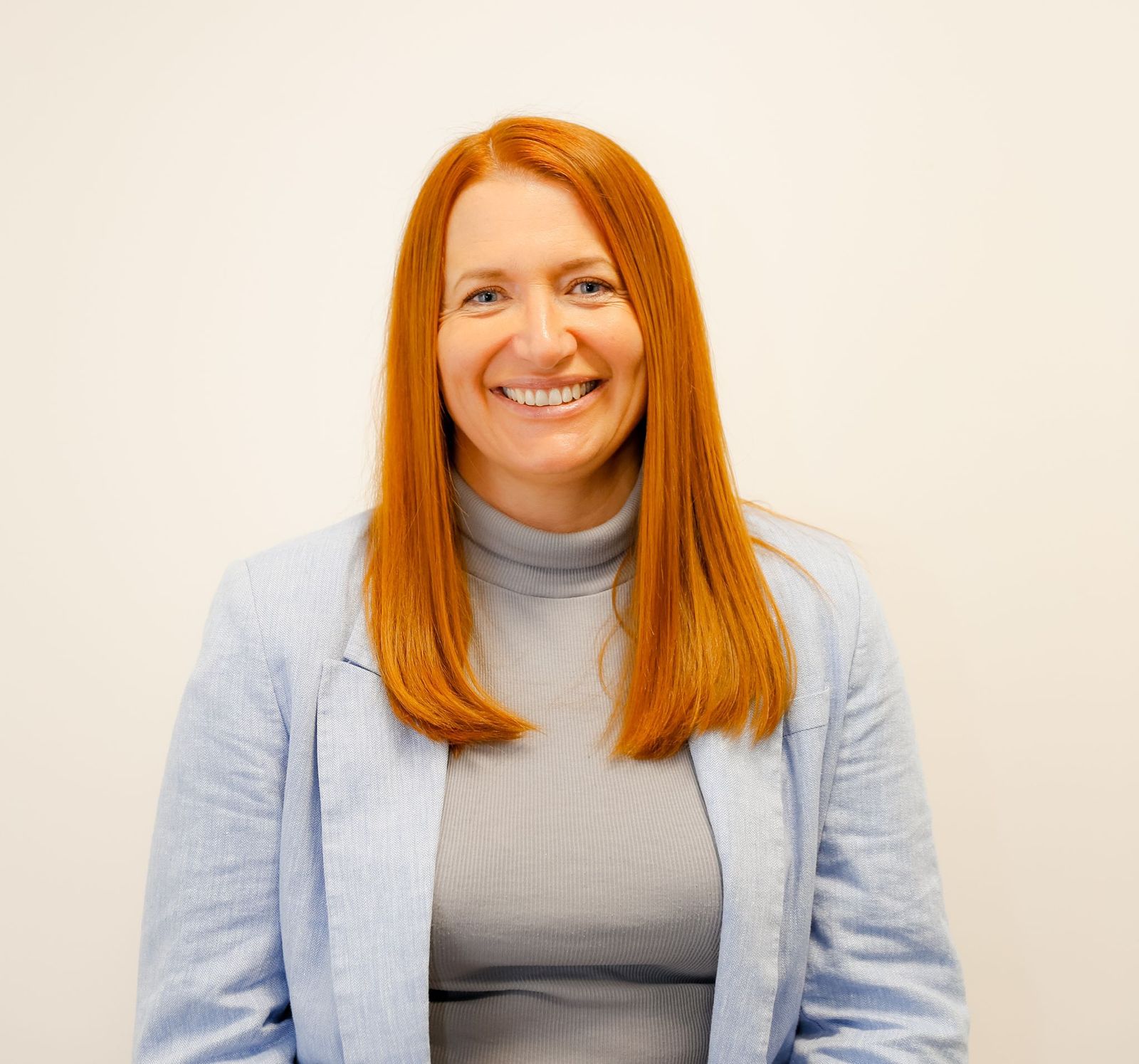
I believe it's essential for you to have a good life, for sustainable success, and for thriving long term. Balance shouldn't be something you strive for. It should be something that everyone has as a matter of course.
Dr. Laura Rees-Davies
·Coaching Psychologist
This interview features Dr. Laura Rees-Davies, Coaching Psychologist. She is someone who truly lives what she teaches. As a single parent, academic, and business owner, she knows firsthand how messy, beautiful, and challenging the pursuit of balance can be. Laura embodies the art of sustainable success, blending personal growth with professional impact. Her journey is a powerful reminder that real success includes space for self-compassion, learning through the hard days, and showing up for life with heart.
“My name is Dr. Laura Rees-Davies. I'm a Chartered Coaching Psychologist and a Senior Lecturer at Cardiff Metropolitan University. I'm also the Founder of Glide Forward, a consultancy specializing in workplace wellbeing, education, and leadership effectiveness.
I have over 20 years of experience in higher education and 14 years in coaching. My work primarily focuses on developing interventions that support people in areas of success, or perhaps areas where they are not doing so well and want to improve. A key part of my approach is helping people grow in a sustainable way, on how this is going to impact them over the longer term, professionally and personally.
I don't think balance is a luxury; I believe it's essential for you to have a good life, for sustainable success, and for thriving long term. Balance shouldn't be something you strive for. It should be something that everyone has as a matter of course.”
How do you personally define work-life balance, and why do you think it's important?
I think it's really important, I think it's essential, and I think it's fluid. I don't think that at any one time you can put a number of hours on a work-life balance, or think about it in terms of a very descriptive way of operating.
If you're in a situation where you're feeling really enthused by work, then a work-life balance might be that your personal life is accepting that you're excited about work and you want to give that your all. And then vice versa: if work is a little bit quieter, and there's something going on in your personal life that needs your attention, you are able to give that the time.
Being able to manage the ambitions that I have in my professional life, whilst also feeling like my family life is going really well, this fuels a feeling of resilience, of being able to manage anything that throws itself in your way.
What is the biggest challenge you've faced in maintaining work-life balance, and how did you manage to overcome it?
Probably the biggest challenge is managing being a single parent whilst also being really ambitious during my PhD, while my children were young. I would have to have a job as a lecturer, and then I was a researcher, and I was a parent, so I had to manage those roles effectively.
I didn't always get it right, but it was definitely about having different hats on for each of the situations that I was in. One of the things that I found quite difficult is, due to technology, we have lots of different ways in which people can communicate with you. I've had to be strict about keeping email off my phone so that when I'm out with my family, I'm not looking at my emails.
What misconceptions about work-life balance have you encountered in your journey?
A major misconception on my part is that it means doing less professionally, and that you don't do as much, and that you give up certain things. It requires you to do better at the things that you do, being really strategic about the things that you choose to participate in, learning how to say no, delegate, get other people involved.
I think it's a misconception that work-life balance is a static state of nine till five. I think it's dynamic. Be consciously aware of the impact that it's having, understand and continually check in with yourself about whether it's worth what you're actually doing.
How do you prioritize tasks and manage your time effectively?
I'm simply a calendar and a to-do list person. I will put dates if there are deadlines, and then I insert the number of hours into the calendar. I try and order them in terms of priority. If something is a bit more of a slow burner, like a project for example, then I'll put time into the calendar regularly.
I identify the three to five biggest priorities that are on my to-do list and then I schedule those first. I also make sure that I build in time where I'm not doing anything. It gives me a bit of time then if anything goes wrong, so I don't feel overwhelmed and exhausted by the end of the day.
I've recognized that professionally, there's never going to be a point where everything's finished. But now, for the most part, I'm just relaxed and chilled about work, because I know it'll get done. I've put things into the calendar, and that stops me from having that kind of mental noise of trying to manage it all in my head.
I am being clear and confident that I take my work-life balance very seriously, and the importance of rest.
Dr. Laura Rees-Davies
·Coaching Psychologist
How do you encourage and support work-life balance among the people you work with?
I try and model it as much as possible, and I'm very clear then about where my boundaries are. I don't mind telling people I'm not happy for you to contact me if I'm on holiday, I won't be answering emails.
I do also talk about the value of working flexibly. I'm very lucky to have a hybrid role. Also checking in with colleagues and students just to see how they are, and to talk about personal life as well, so people know that I'm not just all about work. Workload is really important — you're going to be able to do quality rather than quantity.
How do you set boundaries between work and personal time, especially in a remote or hybrid work environment?
Communication is key. I articulate it clearly to people, and I make sure I ask permission. I don't have email on my phone. I physically put my laptop away, I pack it into my bag, and I put my bag away so I can't see it anymore. It's about those kinds of rituals where you signify the end of a working day.
An example might be I used to go for a walk straight after work. Or I would physically go into the kitchen and make sure I had dinner in the kitchen rather than in the living room, where I usually work from, to signify to myself, right, you're out of that now.
How do you ensure you make time for family, friends, and personal interests despite your professional responsibilities?
I've got a very full life outside of work. I do a lot. I love that. I'm the type of person that likes to do as much as possible, but I also really value doing nothing — time at home where you could just sit on the sofa and watch TV or go on your phone and do things that are not really there for a goal.
I also have a shared calendar that helps me to figure out what we're doing over the next year or so. It's more about protecting those times where we have connections with our family and friends. And it helps with the motivation side of things — knowing I've got something exciting coming up outside of work.
How important is physical health to your work-life balance, and how do you incorporate it into your routine?
I think physical health is key to success. I do believe that movement and being active can take many different forms. An example would be I dance regularly. When I dance, I still burn as many calories, and you might not have even realized that you did any exercise. While dancing, we're also social with other people, and it's a night out. It's another set of friends.
Sleep is absolutely key to me. If I don't sleep well, or my routine of sleep is put out, then it really does impact my physical and mental well-being and my productivity at work. Self-care is important too — making sure you shower regularly and look after your physical health by making sure you go to your checkups.
How do you manage and prioritize 'me time' in your schedule?
I like personal connections, but I do need that time and space to recharge my batteries. Also, when I'm travelling back and forth to work, that's really good time for me while I'm on my own. The gym and walking my dogs — those are probably the two other things where I'm actually solo and spending time with my own inner thoughts.
It's about knowing that we are okay to spend time alone, and that it is okay not to feel guilty about it. We need to just go away and have time on our own and be away from people and conversing.
As your career progresses and life circumstances change, how do you adapt your work-life balance strategies?
You regularly need to review it. When I was younger, my children were young. I couldn't work full-time. The only way I could do that was to have two or three part-time jobs while I was doing my PhD. It seems like having two or three jobs and doing a PhD would have been really tough, but actually it gave me that flexibility to be there for my children when I needed to be.
It's about knowing what requirements are there and understanding all the different moving parts in your life at that particular time. And you can change it and think, actually, this is terrible — be comfortable enough to admit it was maybe the wrong choice, and do something else, a bit of trial and error until it works.
Can you share a personal success story where improving your work-life balance led to better performance?
Being driven, committed and ambitious is part of who I am. I've found that using the calendar approach and being strict with myself helped me — because sometimes, you can let imposter syndrome get in the way, or maybe you can let your confidence or your fear of things get in the way of doing things.
I also found that the starting of the activity for me is the bit that is the tough bit to do. When I'm doing it, usually I'm all right, because I get into the flow. I have a self-coaching talk and think about how important it will be if I get this done, remembering past success. The scheduling of activities and then being stricter with myself to do them — that's probably my success story.
What advice would you give to someone struggling to find balance? What is the first step to start?
To me, it's about honesty, and understanding where the parts of your life are currently very draining and where you're getting joy. We get into a habit of saying, I have to do this, I must do that, instead of thinking about what you want to do. Recognizing that you do have a choice. You do get to choose what you do.
And also, I would say protecting your well-being — making sure that you have clear boundaries in place, that you understand the difference between work and personal life, that you spend time away from work to recharge. Small pockets of time where you get to do something for you is key.
What is one thought you'd like to share with other leaders to inspire them to improve work-life balance within their teams?
I think it's the attitude that a sustainable way of working and balance is not a luxury. It's a leadership responsibility to make sure that your team has a work-life balance. Nurturing a sustainable work environment — that you model a work-life balance with the people that you work with — means that you show that you care about them.
None of us can work at 100% all the time. So, giving that degree of flexibility for life balance is key and not trying to squeeze as much as possible out of someone. Recognizing that if you put them in an area where their strengths are, then they're going to flourish.
Laura's insights were a real breath of fresh air, energizing and full of perspective. I hope they left you feeling as inspired as I did!
There's so much more on the way, so stay tuned as more meaningful conversations and practical resources are on the horizon to help you grow, thrive, and lead with purpose.